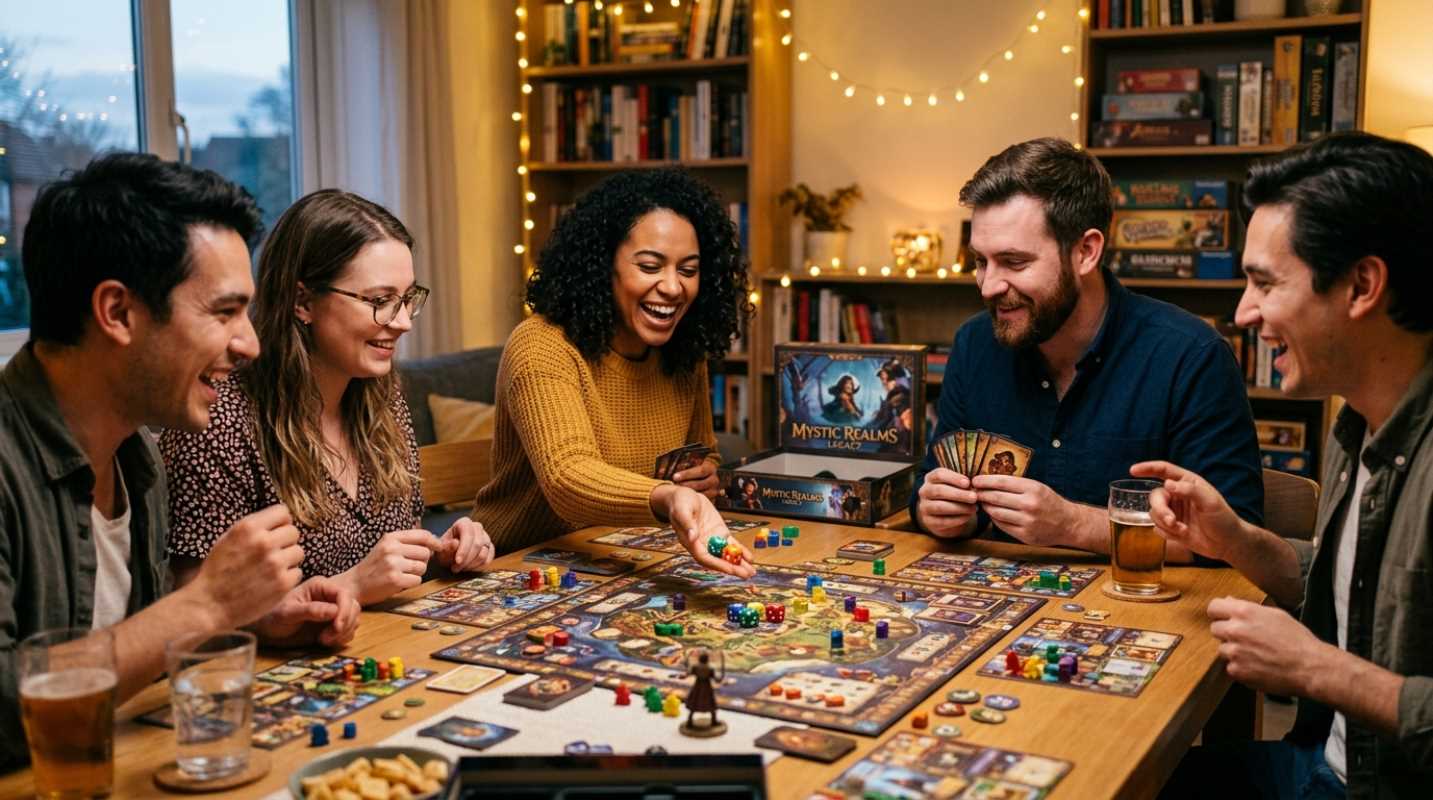
Picture this: it is Friday evening, your smartphone is sitting on silent in another room, and you are sitting around a table with a group of close friends. There is a colorful board spread out between you, a handful of wooden dice, and a stack of beautifully illustrated cards. Nobody is checking notifications. Nobody is scrolling through endless video feeds. Everyone is laughing, scheming, and fully present in the moment.
If this scene sounds unfamiliar, you might be surprised to learn that tabletop gaming is experiencing a massive global resurgence. What used to be considered a niche pastime for enthusiasts has expanded into a mainstream cultural movement. The global board game market has expanded to nearly $20 billion, driven by millions of players who want a physical, face-to-face alternative to digital screens.¹
So why are so many people suddenly setting aside their controllers and tablets to play physical games? The answer comes down to our growing need for real human connection.
The Renaissance of the Tabletop
We live in an age of digital saturation. We work on computers, communicate through messaging apps, and unwind by watching streaming platforms. Although technology keeps us connected in theory, many people feel increasingly isolated in practice. Modern life leaves us hungry for genuine, unscripted social contact.
Board games offer a perfect structured environment for that contact. Sitting around a table forces direct eye contact, organic negotiation, and shared storytelling. You cannot replicate the tension of a live bluff or the shared celebration of a narrow team victory through a screen.
There is also something deeply satisfying about the tactile nature of modern board games. Shuffling heavy cardstock, stacking wooden biomes, placing custom acrylic tiles, and rolling solid dice offer a sensory experience that digital media simply cannot match. Media researchers like Dr. Zachary Horton at the University of Pittsburgh point out that the boom in tabletop gaming works as an analog counter-culture to constant online connectivity.²
At the same time, game design itself has evolved dramatically. If your idea of tabletop gaming is still stuck on Monopoly or Risk, you are in for a pleasant surprise. Today's games have abandoned punishing mechanics like early player elimination and endless luck-based rolling. Instead, modern designs focus on clever engine building, cooperative puzzle solving, and rich storytelling where every player stays engaged until the very end. Recent studies reveal that 26% of adults now play board games at least once a week, with younger generations leading the charge.³
How to Curate Your Collection
Building a great board game collection requires a little approach. If you buy games without considering who will play them, those expensive boxes will end up gathering dust on a shelf.
When picking games for your table, consider these key factors
• Player count flexibility: Look for games that adapt well to different group sizes. Some titles shine strictly as two-player experiences, while others need four or five people to generate enough player interaction.
• Complexity and weight: Match the cognitive load to your group's energy. A heavy approach game requiring two hours of complex math might be great for a quiet Sunday, but it will flop on a casual Friday night after an exhausting work week.
• Theme and appeal: Modern games feature incredible themes ranging from nature conservation and space exploration to cozy ecosystem builders. Choose themes that invite people in rather than pushing casual players away.
To avoid choice fatigue when hosting, do not drag out six different boxes and ask your friends to pick. Select two distinct options beforehand, explain their basic premise in one sentence each, and let the room vote.
Trending New Board Game Releases
The current wave of board game releases offers some of the most creative mechanics and production quality the industry has ever seen. Designers are pushing boundaries with innovative limited-communication co-op mechanics, engine-building depth, and visually breathtaking components.
Here are some of the standout hits making waves on game tables right now
• Sky Team: A strict two-player cooperative game where you and a partner take on the roles of a pilot and co-pilot trying to land a commercial airliner in airports around the world. It uses limited-communication dice placement to simulate real cockpit tension without ever feeling a lot of.
• Bomb Busters: A high-thrill cooperative deduction game where players act as a squad trying to defuse a bomb by cutting hidden wires. Because you cannot speak directly about the numbers on your tile rack, every single decision creates incredible suspense.
• Harmonies: A visually stunning ecosystem puzzle where players draft colorful wooden space tokens to build three-dimensional biomes like mountains, rivers, and forests. It is easy to teach, visually striking, and packed with satisfying strategic choices.
• Wyrmspan: Building on the massive success of bird-collecting hit Wingspan, this stand-alone game lets players act as amateur dragon researchers excavating caverns and luring fire-breathing creatures to their sanctuaries. It adds new layers of tactical depth while keeping a cozy, rewarding feel.
• Arcs: For groups wanting a deep approach and emergent narrative, this space opera combines trick-taking card mechanics with tactical galactic fleet battles. It delivers high-stakes player interaction and dynamic sci-fi storytelling in every session.
Elevating the Experience for Game Night
Hosting a memorable game night takes more than just opening a cardboard box. A little bit of preparation turns a routine evening into an event your friends look forward to all week.
Start with the physical environment. Clear enough space on your table so players do not feel crammed, and make sure the room has adequate lighting so everyone can read card text clearly. Keep finger-friendly snacks nearby, but steer clear of greasy or sticky foods like potato chips or wings to protect your cards and game boards from permanent damage. Pre-bowled pretzel sticks, nuts, or bite-sized fruit work best.
Teaching the rules effectively is another important hosting skill. Nothing kills the momentum of an evening faster than a host reading a 20-page rulebook line-by-line while everyone else stares at their phones. Learn the rules in advance, or play a quick walkthrough video from a popular online tutorial channel. Explain the win condition first, give a brief tour of what a normal turn looks like, and then jump right into playing.
Most importantly, keep the tone welcoming and light. Encourage healthy competition, but praise clever moves made by your opponents, and keep the focus on shared entertainment rather than cutthroat winning.
The Future of Tabletop Gaming
This explosion of interest in physical games is not a temporary trend. The tabletop world has built a resilient ecosystem backed by direct community support. Platforms like Kickstarter regularly raise hundreds of millions of dollars for independent game designers, allowing wild, creative concepts to find eager audiences without needing traditional corporate approval.
As our work and social lives become increasingly digital, the value of physical gathering spaces will only grow. A board game is ultimately an invitation to slow down, share a table, and create memorable experiences with people you care about.
If you have been thinking about starting your own game night, there has never been a better time to jump in. Grab a box that catches your eye, invite a few friends over, clear off the kitchen table, and let the games begin.
Sources:
1. imarcgroup.com
https://www.imarcgroup.com/board-games-market
2. pitt.edu
https://www.pittwire.pitt.edu/pittwire/features-articles/rise-board-games-today-s-tech-dominated-culture
3. asmodee.com
https://corporate.asmodee.com/news/nearly-two-thirds-of-people-strengthen-family-ties-through-tabletop-games