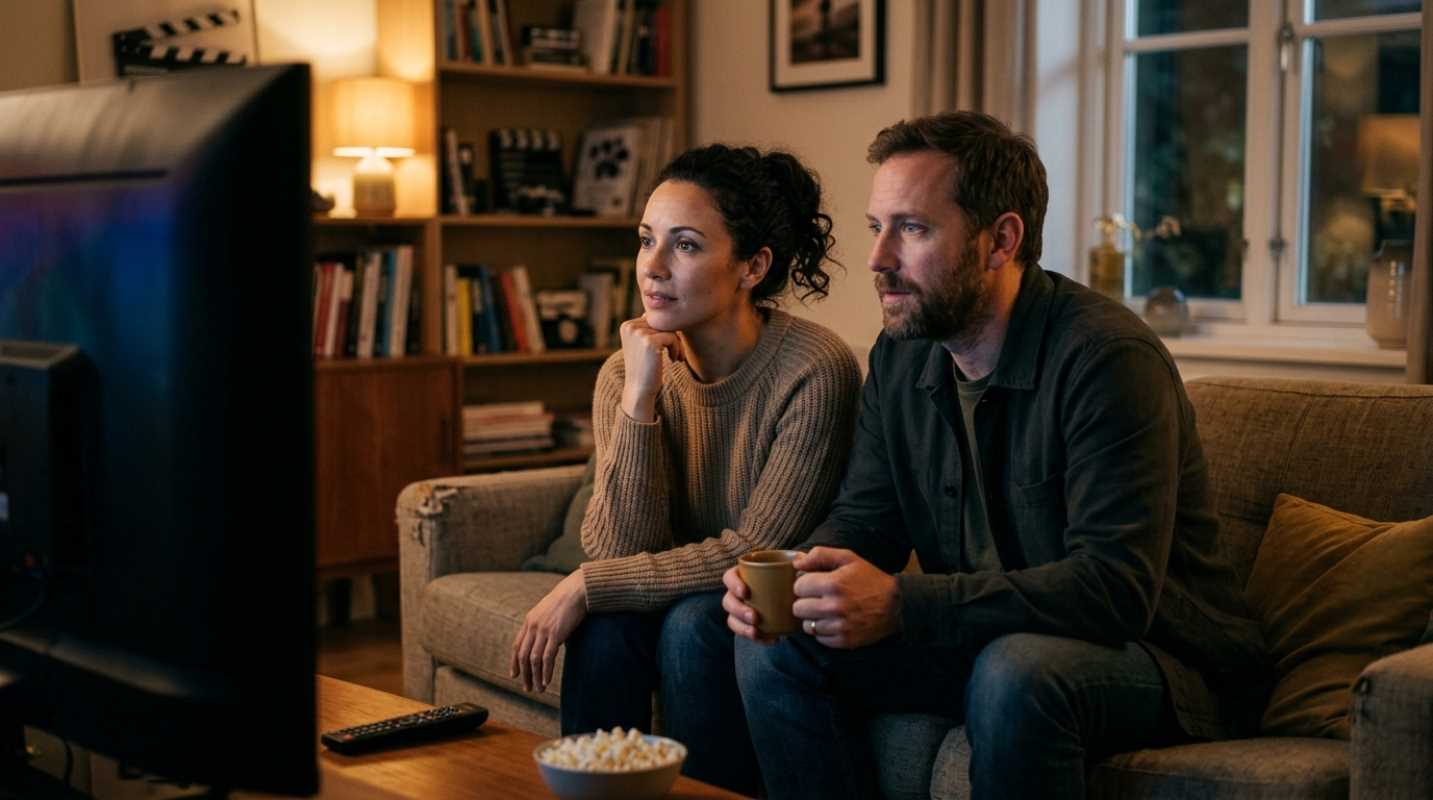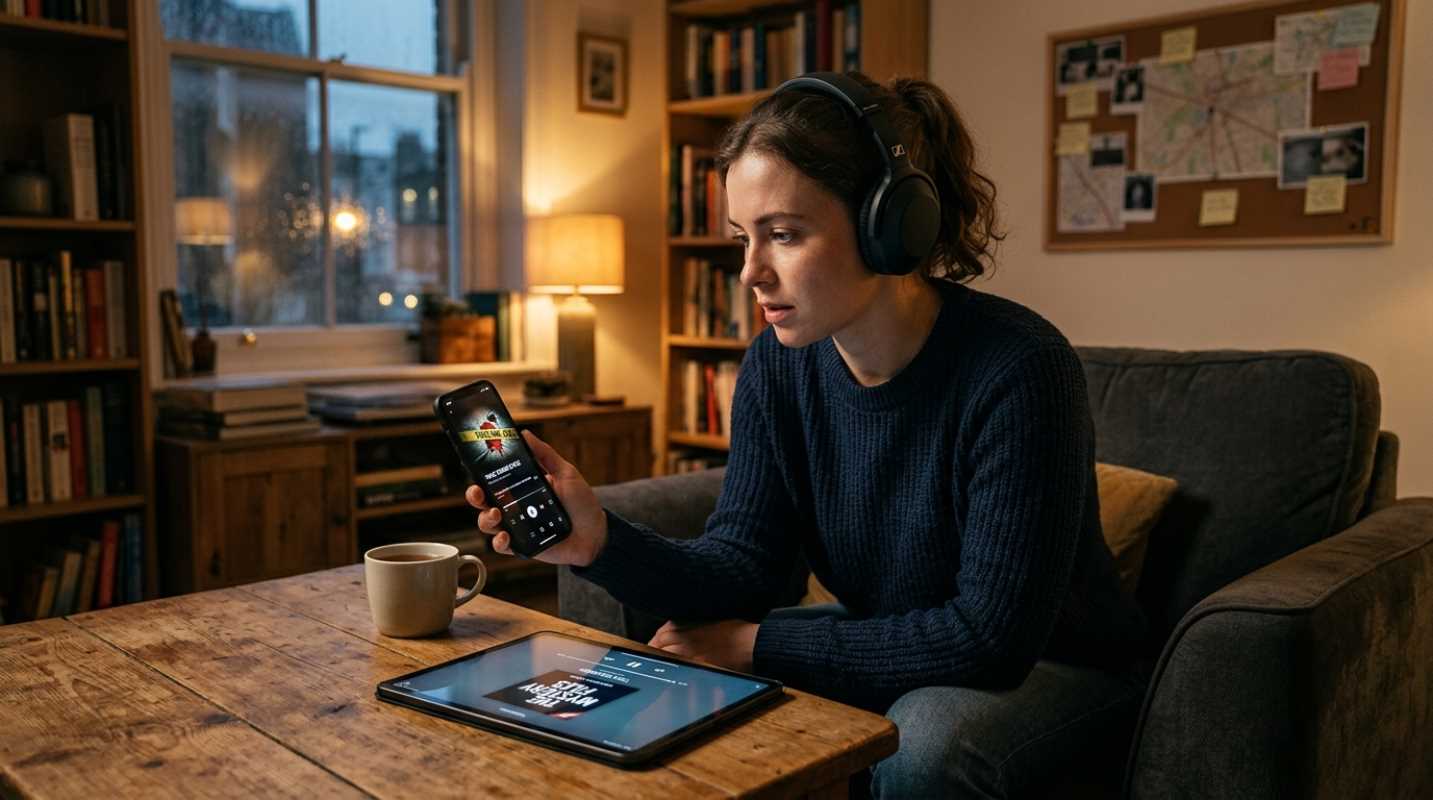
Have you ever caught yourself staring at your screen at two in the morning, listening to a narrator break down a mystery? You tell yourself you will watch just five more minutes, but suddenly the sun is coming up. You are definitely not alone in that late-night rabbit hole.
Psychologists call this phenomenon safe fear. It is the same chemical rush you get on a high-speed roller coaster. You get the spine-tingling adrenaline of facing danger, but you get to do it wrapped in a soft blanket with a locked front door.
What used to be a niche obsession buried in the back corners of late-night cable or true crime paperbacks has exploded into a mainstream powerhouse. Today, a staggering 84% of Americans over age 13 consume true crime content through streaming platforms, podcasts, or social video.¹ We are no longer passive observers. We have become a culture of armchair detectives, constantly dissecting motives and re-examining evidence.
An Era of Unprecedented Consumption
Streaming platforms completely changed the game for how we consume stories of real-world drama. Binge-watching normalized spending eight straight hours following a single criminal trial or cold case.
The rise of podcasting blew the doors off the genre by making high-level investigative reporting accessible to anyone with a pair of headphones. Around 42% of the U.S. population tunes into true crime podcasts, which now represent nearly a fifth of all podcast downloads overall.³
Interestingly, the audience driving this boom is a lot female. Research shows that roughly 67% of true crime podcast listeners are women.¹ Why does the genre resonate so strongly with women? Research suggests that women often use these stories as cautionary tales, exercises in empathy, or complex psychological puzzles to solve. It gives listeners a way to process real fears in a controlled environment.
Video podcasts have taken over as well. YouTube is now the top platform for true crime audio and video content, capturing 33% of weekly listeners and pulling ahead of audio-heavy apps like Spotify and Apple Podcasts.¹
The types of stories we watch and listen to are changing quickly. Audience tastes are moving away from graphic profiles of notorious serial killers. Recent hits focus heavily on systemic police failures, white-collar scams, stalking, and judicial misconduct. Shows like American Nightmare hit a nerve because they expose how fragile the legal system can be when authorities rush to judgment.
Top Recommendations and Must-Listen Shows
When you look at the thousands of crime shows available today, the difference between cheap exploitation and top-tier storytelling comes down to research and integrity. The best creators operate like seasoned investigative journalists. They do not just summarize Wikipedia pages. They pull original court transcripts, interview primary sources, and hire independent forensic experts.
Showrunners who set the industry standard know how to balance suspense with human dignity. Shows produced by networks like audiochuck, creators of Crime Junkie, or advocate-led podcasts like Sarah Turney’s Voices for Justice build their entire narrative around bringing awareness to cold cases. They direct their massive audiences toward tangible actions, like funding private DNA testing or calling in tips for missing persons.
A great true crime host builds trust with you through credibility rather than sensationalism. When a host takes the time to verify every document and treat victims with respect, the storytelling becomes far more compelling.
The Dark Side of Success and Ethical Concerns
Success always comes with a cost. As the market for murder stories exploded into a multi-billion-dollar business, serious ethical questions came to light. The line between genuine public advocacy and cheap human exploitation is often thin.²
The biggest issue is the total lack of consent from victims' families. High-profile streaming dramatizations often reconstruct awful personal tragedies without notifying or compensating the surviving relatives. Families are frequently forced to relive their worst nightmares in real time while media companies profit off their pain.
Then there is the rise of online vigilantes. Crowdsourced sleuthing on TikTok, Reddit, and X turned real cases into interactive games. Amateur sleuths regularly push baseless theories, dox innocent citizens, and harass grieving relatives. Media ethics expert Dr. Whitney Phillips at the University of Oregon warns that treating real human suffering like an interactive brain puzzle distracts law enforcement and causes genuine harm to victims.
There is also a bizarre disconnect in how these shows are monetized. It is deeply jarring to hear a host transition from a heart-wrenching account of a violent crime directly into a cheerful advertisement for a mattress or a meal kit. When tragedy becomes content, the drive for clicks can easily override human empathy.
The Future of True Crime and Responsible Consumption
So where does the genre go from here? The good news is that both creators and audiences are demanding better standards.
The future of true crime belongs to victim-centric storytelling. Advocates and industry organizations, such as the National Center for Victims of Crime, are pushing creators to adopt trauma-informed production practices. Audiences are actively tuning out creators who rely on cheap shock value or sensationalized gore.
As viewers and listeners, you hold incredible power over what gets produced. Here is how you can consume true crime content more responsibly
• Check for victim consent, look for shows that collaborate directly with families or feature advocate-led reporting.
• Avoid sensationalized gossip. Skip creators who turn active investigations into speculative TikTok series or online witch hunts.
• Support shows that give back, choose podcasts and documentaries that actively raise funds for cold case DNA testing or missing persons organizations.
• Demand transparency, Stick to hosts and journalists who cite their sources and correct the record when they make mistakes.
True crime does not have to be a guilty pleasure. By choosing ethical creators and remembering that every case involves real human lives, we can enjoy the suspense of a great mystery while keeping respect and justice at the center of the story.
Sources:
1. Edison Research True Crime Consumer Report
https://www.edisonresearch.com/solutions/true-crime-consumer-report/
2. MA Chronicle - The Ethics of True Crime Consumption
https://machronicle.com/opinion-the-ethics-of-true-crime-consumption-are-deeply-troubling/
3. SSRS True Crime Consumer Report
https://ssrs.com/wp-content/uploads/True-Crime-Consumer-Report.pdf