Have you ever walked past a stranger and suddenly found yourself transported straight back to your high school hallway? Or caught a light whiff of cedar in an elevator and immediately remembered a favorite weekend getaway? That isn't just nostalgia playing tricks on your mind. Your olfactory system connects directly to the emotional hub of your brain, making smell our most immediate sense.
Why Your Signature Scent Matters
Picking out a perfume isn't just about smelling clean. It's about building an invisible personal trademark. Think of a signature fragrance as the ultimate style capstone. It enters the room right before you do and lingers softly after you leave.
These days, more people are skipping mass-market scents in favor of unique bottles that tell a distinct story.¹ We are treating perfume as an extension of identity and personal wellness. Finding the right bottle gives you an instant boost of confidence before you step out the door.
Building a collection starts with understanding what actually goes into that bottle sitting on your vanity.
Decoding the Basics - Understanding Fragrance Families and Notes
Navigating a department store beauty counter can feel a lot faster. Dozens of bottles compete for your attention, each promising something completely different. To make sense of it all, perfumers group scents into primary families.
• Floral: Romantic, classic, and versatile. These scents feature notes like rose, jasmine, peony, and tuberose.
• Woody: Grounding, earthy, and warm. Look for base elements like sandalwood, cedarwood, vetiver, and patchouli.
• Amber: Sensual and warm with a touch of spice. Common notes include vanilla, amber, resin, and cardamom.³
• Fresh: Crisp and energetic. These feature bergamot, lemon, sea salt, and green tea notes.
• Gourmand: Cozy and sweet. Think rich notes like coffee, vanilla, almond, and toasted marshmallow.
Beyond fragrance families, every perfume evolves across three distinct layers as it settles onto your skin.
• Top Notes: The initial impression you smell right out of the bottle. High-volatility molecules like citrus and berries last about 15 minutes before evaporating.
• Heart Notes: The core personality of the perfume. These emerge after top notes fade, featuring florals or spices that stay active for up to an hour.
• Base Notes: The foundation of the scent. Rich molecules like musk, woods, and vanilla bind to skin for six to eight hours or longer.
Concentration also plays a huge role in performance. Here is how common formulas break down.
• Eau de Toilette (EDT): Features 5% to 15% perfume oil. Lasts around three to five hours and works well for warm weather or light daytime wear.
• Eau de Parfum (EDP): Contains 15% to 20% perfume oil. Lasts six to eight hours and serves as the standard choice for daily signature wear.
• Extrait de Parfum: Contains up to 40% oil concentration. Sits close to the skin and lasts over ten hours for a luxurious experience.
Your unique skin chemistry interacts with these formulas constantly. Body temperature, natural skin oils, and pH levels change how a perfume smells on you compared to how it smells on a tester strip.
The Art of the Hunt - How to Test and Choose a Perfume
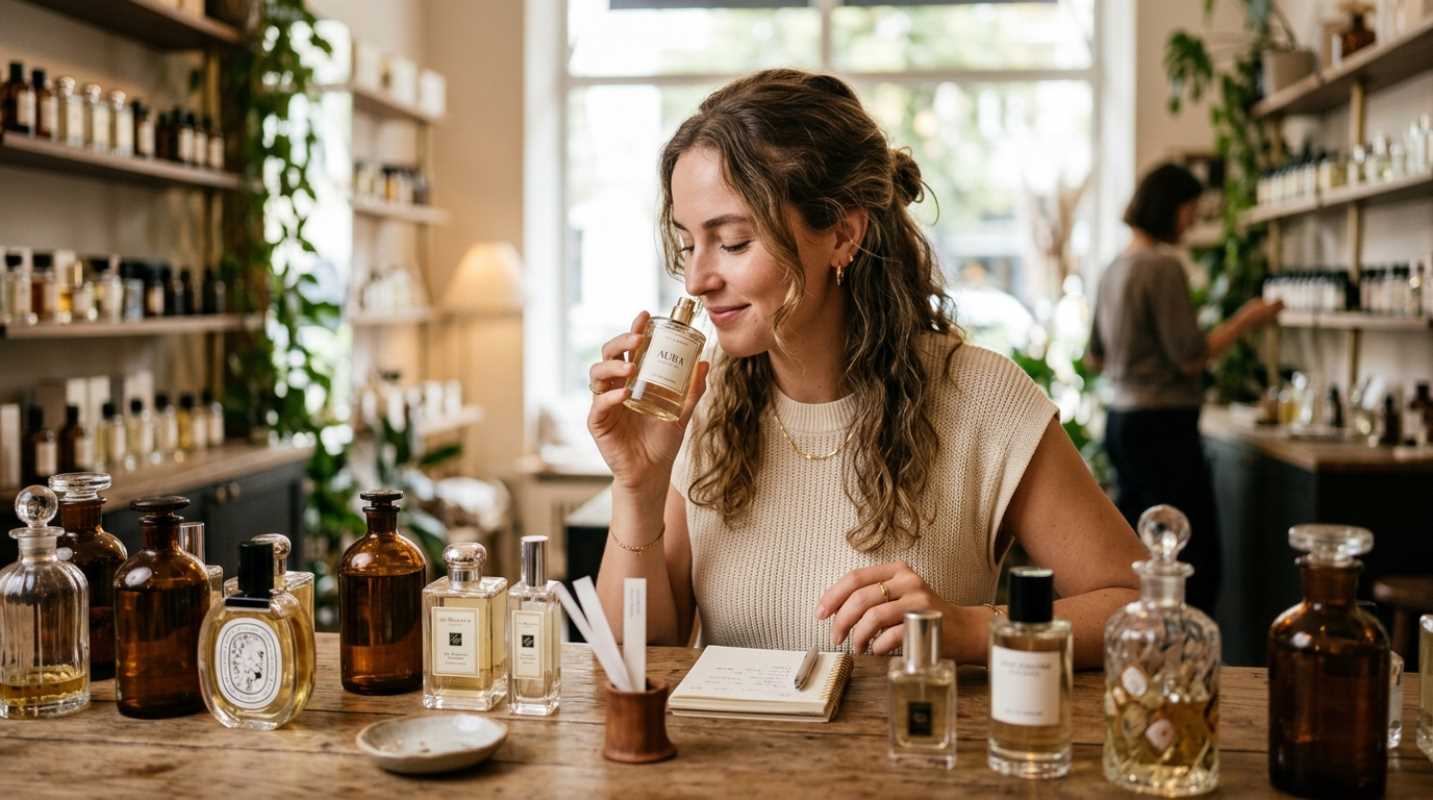
The biggest mistake beginners make is buying a full bottle after one quick spray on a paper card. Paper blotters are great for discarding things you instantly dislike, but they can't show you how a perfume matures on your body.
Always perform a wear test on skin before committing to a purchase. Spray a contender on your wrist, leave the store, and live your day. Notice how the scent shifts from lunch to dinner.
Sampling has become a massive movement lately, with millions of beauty lovers sharing discovery kits on TikTok.² You don't need to spend a fortune on blind buys when small decants let you test scents at home.
Follow these practical rules when you test fragrances in person.
• Limit your options: Try no more than three or four scents per store visit. Anything more will overwhelm your nose.
• Reset your senses: Smell clean skin on your forearm or a piece of neutral cotton clothing between samples to clear your nose.
• Skip immediate buying: Allow the liquid to sit on skin for at least six hours to experience the full dry-down phase.
Pro-Tips for Making Your Fragrance Last Longer
You finally bought a bottle you love, but it seems to vanish by lunchtime. Why does that happen? Perfume needs moisture and body heat to thrive, and dry skin absorbs oil molecules before they can radiate.
Here are reliable steps to make your scent stay strong all day.
• Moisturize first: Apply an unscented lotion or a tiny touch of petroleum jelly to pulse points before spraying. Moisturized skin traps perfume molecules effectively.
• Target pulse points: Focus on warm areas where blood vessels sit close to the surface. Spray your wrists, the base of your neck, inner elbows, and behind your ears.
• Never rub your wrists: Avoid rubbing your wrists together after applying. Friction generates excess heat that crushes delicate top notes prematurely.
• Spritz clothing safely: Fabrics hold scent molecules far longer than skin. A light mist on your jacket or scarf helps your perfume linger into the evening.
• Store bottles properly: Keep your bottles away from bathroom humidity, direct sunlight, and heat. Storing them in a dark closet or drawer preserves fragrance quality for up to five years.
Building Your Scent Wardrobe
Do you have to settle on just one signature bottle? Not at all. Many fragrance lovers prefer building a scent wardrobe that adapts to different seasons, moods, and events.
A light citrus or aquatic spray feels refreshing on hot summer days. Meanwhile, rich amber and warm sandalwood notes shine during chilly winter months. You might want a subtle, clean option for corporate office settings and a bolder bottle for nights out.
Whether you stick to one holy-grail bottle or rotate through a carefully chosen lineup, focus on finding something that matches your personal rhythm. Perfume is an accessible luxury that brings a moment of joy to your morning routine. Take your time sampling, trust your instincts, and enjoy the discovery process.
Sources:
1. Scento Fragrance Market Statistics
https://www.scento.com/blog/fragrance-market-statistics-2026-size-growth-consumer-trends
2. Scento How to Choose Your Signature Scent
https://www.scento.com/blog/how-to-choose-your-signature-scent-in-2025
3. Maison Alhambra Perfume Families Explained
https://maisonalhambra.co/perfume-families-explained/