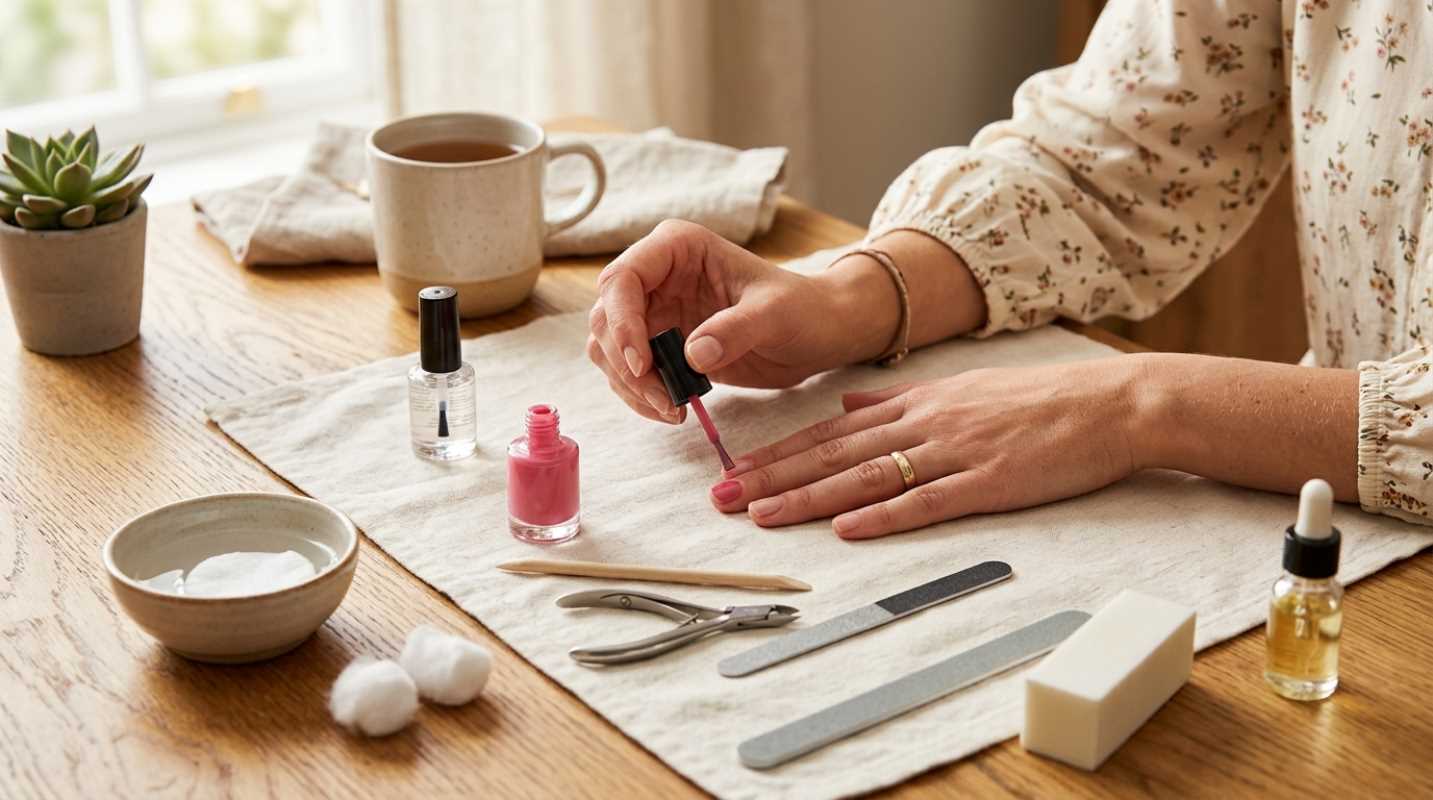
There is something undeniably satisfying about looking down at a set of freshly manicured nails. It gives you a quick boost of confidence that stretches through your entire week. But booking regular salon appointments gets expensive fast, and finding two free hours in a busy schedule is not always easy.
Mastering the art of doing your own nails at home changes the entire equation. You save serious money while getting full control over the products touching your skin. In fact, over 70 percent of people now consider nail care a needed part of their personal grooming routine.¹ You do not need a complex setup to get great results either. With a few right techniques and reliable tools, you can easily transform your living room into a high-end nail studio.
Building Your Toolkit and Choosing the Right Products
If you are still using a cheap metal file or cardboard emery board, it is time for an upgrade. Poor tools shred your natural nail layers, leading to peeling tips and constant snags. Investing in proper equipment is the single fastest way to improve your results.
Start by trading your traditional file for a fine-grit glass file. Glass files seal the keratin edges of your nail as you shape them, which prevents micro-fractures. For cuticle work, grab a stainless steel or rubber-tipped cuticle pusher rather than sharp metal cutters. You will also want quality nail clippers that make crisp, clean cuts without crushing the nail plate.
For polish, the formula matters just as much as the shade. Look for clean, 10-free polishes that leave out harsh solvents. If you love light-curing gel kits, pay close attention to ingredients and make sure you choose HEMA-free gels to avoid unnecessary skin sensitivities.
Never skip your base and top coats. A good base coat acts like double-sided tape, giving polish something to grab onto while protecting your natural nails from dark stains. A high-shine top coat seals everything in, shields against chips, and gives you that smooth finish.
Nail Health and Strengthening Tips for Growth
Think of nail care as a direct extension of your daily skincare routine. Your nails and cuticles need hydration to stay flexible and strong. When nails get dry, they become brittle and snap at the slightest pressure.
Cuticle care is where most people make serious mistakes. The American Academy of Dermatology warns never to cut your cuticles.² That tiny layer of skin is your body's natural seal. It keeps water, bacteria, and fungi away from the delicate nail matrix underneath. When you cut it, you invite irritation and infection. Instead, apply a nourishing oil with jojoba or vitamin E, let it sit for two minutes, and gently push the skin back.
Another needed concept is nail cycling. If you wear gel polishes or press-ons regularly, your nails need periodic rest periods. Give your nails a one to two-week break every month or two. This downtime allows the keratin structure to rehydrate and recover.
Be aware of gel safety, too. Dermatologists have noted a sharp rise in allergic contact dermatitis triggered by uncured acrylates like HEMA in at-home gel kits.³ Using low-wattage or mismatched UV lamps leaves uncured gel sitting on your nails, which can trigger permanent skin allergies. Always stick to reliable lamps designed for your specific polish.
To support growth from within, keep your diet packed with rich nutrients. Wearing rubber gloves when washing dishes or using household cleaners also saves your nails from absorbing excess water and harsh cleaning agents.
The Ultimate At-Home Manicure Step-by-Step Guide
Ready to put it all together? Here is a simple step-by-step process for a long-lasting manicure at home.
1. Cleanse and prep: Wipe away old polish using a non-acetone remover. Non-acetone is far gentler and will not strip your nails of moisture. Wash your hands, then wipe each nail bed with a quick swab of isopropyl alcohol to remove lingering surface oils.
2. Shape and trim: Use clippers to take down length if needed, cutting straight across. Then, take your glass file and shape your edges. File in one direction only. Do not saw back and forth, as that breaks down the delicate keratin layers.
3. Gentle cuticle care: Apply a drop of cuticle oil or remover to each nail. Wait about a minute, then use your pusher to softly guide the cuticles back. Nip only loose, dead hangnails with sterile clippers, never the live cuticle tissue itself.
4. Apply base and polish: Sweep a thin layer of base coat over each nail and let it dry completely. Follow with two thin coats of your favorite polish color. Wait two to three minutes between layers. Thin layers dry faster and prevent bubbling.
5. Seal and clean up: Finish with a generous layer of top coat. Be sure to run the brush horizontally along the top edge of your nail to cap it. If polish gets on your skin, dip a small, angled makeup brush into remover and clean up the edges before it sets.
Maintenance and Troubleshooting for Lasting Results
So you finished your manicure, and it looks incredible. How do you keep it that way for more than a couple of days?
Daily habit updates make all the difference. Keep a cuticle oil pen on your desk or nightstand and apply it twice a day. Hydrated polish remains flexible, meaning it absorbs daily impacts without cracking. Do not use your nails as tools to pry open soda cans or peel off sticky labels. That places huge mechanical stress right on the stress points of your nail bed.
If you do get a minor chip on day four, do not strip off the whole nail. Smooth the chipped edge gently with your glass file, dab a tiny bit of color onto the bare spot, let it dry, and paint a fresh top coat over the entire nail. It looks fresh again in seconds.
Finally, pay attention to what your nails tell you. If you spot white patches, thinning, or peeling, pause polish altogether. Give them a few weeks of pure hydration with nutrient-dense oils and keratin treatments. Healthy nails are always the real secret behind a great manicure.
Sources:
1. Amra & Elma - Nail Health Statistics
https://www.amraandelma.com/nail-health-marketing-statistics/
2. American Academy of Dermatology - Healthy Nail Tips
https://www.aad.org/public/everyday-care/nail-care-secrets/basics/healthy-nail-tips
3. Professional Beauty - Dermatologists Warning About Gel Nails and HEMA
https://professionalbeauty.co.uk/site/newsdetails/dermatologists-warning-about-safety-gel-nails-hema
*This article on decorgeous is for informational and educational purposes only. Readers are encouraged to consult qualified professionals and verify details with official sources before making decisions. This content does not constitute professional advice.*