Remember when self-tanning meant risking an orange tint, stained bedsheets, and a harsh chemical smell? You probably know someone who ended up with patchy streaks right before a major event. Thankfully, those days are long gone. Sunless tanning technology has completely transformed over the last few years. Today, high-tech formulas combine self-tanning with deeply hydrating skincare ingredients like hyaluronic acid, niacinamide, and squalane.¹
Beyond looking healthy, sunless tanning is simply much safer for your skin. Indoor tanning beds can raise your risk of melanoma by 59 percent, which has driven millions of people toward safe, UV-free alternatives. Self-tanning sales have surged as a result, with UK sales jumping 43 percent in a single year alone.²
So, how do you get a flawless, natural-looking bronze at home without turning orange or streaky? Let's break down everything you need to know.
Mastering the Prep - The Secret to Longevity
Getting a smooth tan comes down to your preparation routine. If your skin is dry or uneven, the tanning product will settle in patches and look blotchy.
Think of your skin like a blank canvas. If the canvas is rough, the paint will not lie flat. Taking time to prepare your skin 12 to 24 hours before you apply any product makes all the difference.
Here are the key prep steps you should follow
• Exfoliate early: Scrub your whole body with an oil-free scrub or an exfoliating mitt 12 to 24 hours before tanning. Give extra attention to rough spots like your knees, elbows, ankles, and heels.
• Space out your shaving: Shave or wax at least a day before you apply tanner. If you shave right before tanning, the product can sink into open pores and leave dark spots on your legs.
• Avoid heavy oils: Skip oil-based body washes and heavy creams on tanning day. Oils leave a film on your skin that blocks the tanner from developing evenly.
• Apply a light barrier: Put a tiny dab of lightweight moisturizer on dry spots like your knuckles, wrists, ankles, and knees right before you start. This prevents those areas from soaking up too much product.
Choosing the Right Self-Tanner for Your Skin Tone
Have you ever wondered why the same bottle of fake tan looks golden on your friend but brassy on you? It all comes down to undertones and active ingredients.
The chemical magic behind sunless tanning is a plant-derived sugar called Dihydroxyacetone, or DHA. When DHA touches the top layer of dead skin cells, it triggers a natural reaction that produces brown pigments called melanoidins. Because these pigments sit on your skin surface, your tan naturally fades over five to seven days as your skin sheds.
To get a natural result, match your tanner's color-correcting base to your skin's natural undertone
• Cool or pink undertones: Look for green-base tanners. Green neutralizes red and pink tones on pale skin to deliver a golden brown shade.
• Warm or golden undertones: Pick violet or purple-base tanners. Violet counteracts yellow or brassy tones to yield a deep chocolate bronze.
• Olive undertones: Choose red or magenta-base tanners. These add richness to your natural color and keep your skin from looking ashy.
• Neutral undertones: Caramel or brown-base tanners work on almost everyone and give a balanced, natural tint.
Pay attention to DHA percentages as well. If you have fair skin, look for products with 6% to 8% DHA. Medium skin tones do best with 8% to 10% DHA, while deep skin tones can comfortably use 12% to 14% DHA for a deeper result.
The Art of Application - Achieving a Streak-Free Finish
Applying self-tanner does not have to feel chaotic or messy. Once you have your tools ready and follow a clear plan, you will get smooth coverage every single time.
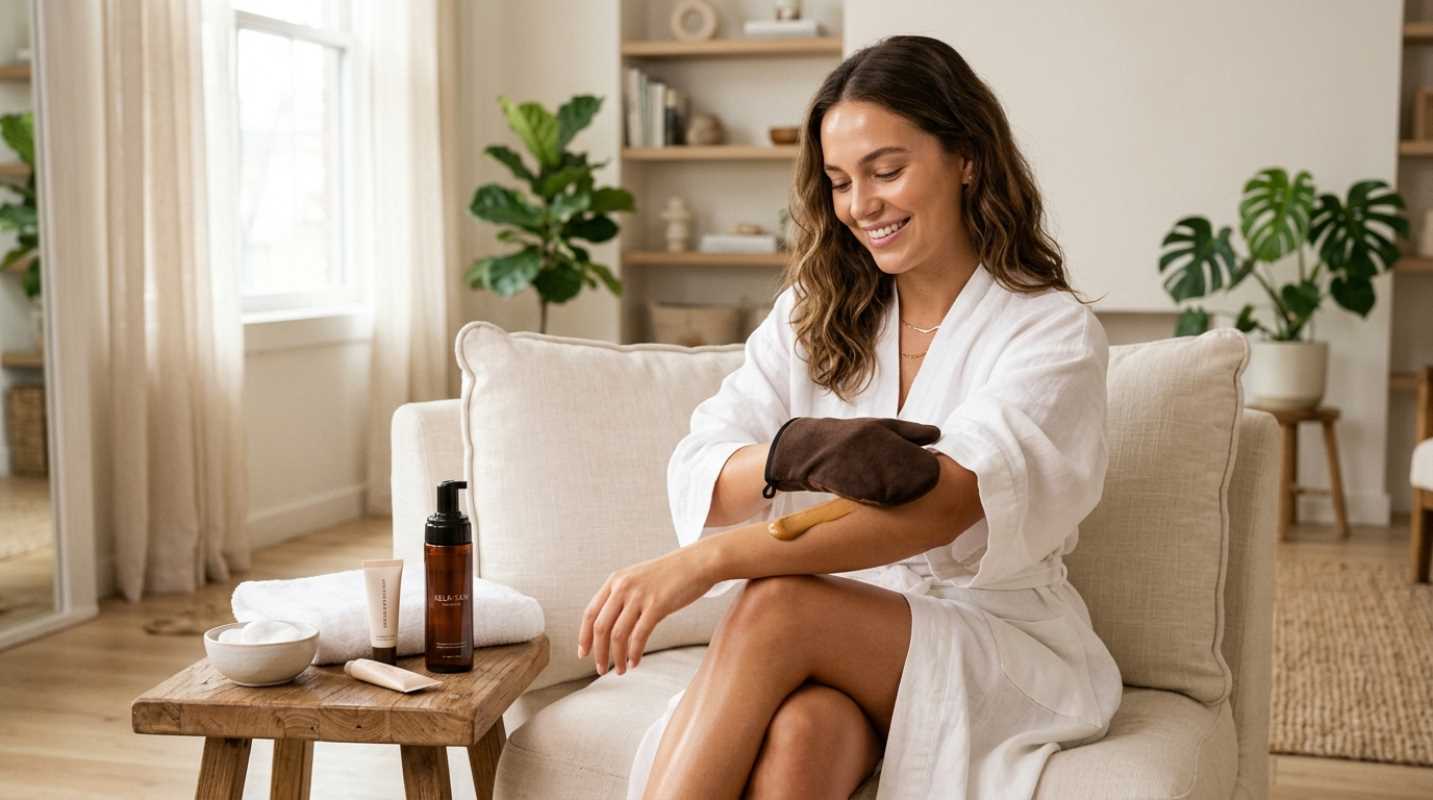
First, toss out the idea of applying mousse with your bare hands. Strained, orange palms are an instant giveaway. A plush velvet mitt make sures an even finish while keeping your hands totally clean.
Follow this simple method for seamless results
1. Start at your ankles and work your way up toward your chest and shoulders. Tanning your lower body first keeps the product from folding or creasing when you bend down.
2. Pump your mousse or lotion directly onto your velvet mitt, then apply it in sweeping, circular motions.
3. Use leftover product on the mitt for tricky spots like your feet and wrists rather than adding fresh pumps.
4. Grab a dense, synthetic Kabuki brush to blend product over your knuckles, toes, and along your jawline. A brush gives you precise control over tight areas.
5. Apply face-specific tanning drops mixed into your evening moisturizer for a gentle facial glow that matches your body.
The Aftercare Routine - Keeping the Glow Alive
Congratulations, your tan is applied! Now, how do you make it last a full week without fading unevenly?
The first few hours after application are important. The global sunless tanning market continues to grow rapidly as more people build tanning aftercare directly into their weekly bodycare routines.³ Taking care of your skin after tanning keeps your color look fresh for up to ten days.
Keep these simple aftercare habits in mind
• Wear dark, loose clothing: Put on baggy clothes right after tanning so tight waistbands or straps do not rub off your developing color.
• Rinse with plain water: When it is time for your first shower, use lukewarm water only. Skip soaps, body washes, and loofahs until your second shower.
• Moisturize twice daily: Apply an oil-free body lotion morning and night. Hydrated skin cells stay attached longer, which means your tan fades smoothly instead of cracking into patches.
• Pause active facial acids: Put your glycolic acid, salicylic acid, and retinoids on hold while you have a tan, as chemical exfoliants dissolve color pigment quickly.
• Top up with gradual lotion: Apply a mild gradual tanning lotion every three days to extend your shade depth without building up product.
Your Glow, Your Rules
Getting a bronze look at home is simple once you know how DHA works with your skin tone. By prepping your skin ahead of time, using a velvet mitt, and keeping your skin moisturized, you can enjoy a natural glow all year long.
Do not be afraid to experiment with different formula textures, like airy mousses, hydrating lotions, or clear tanning waters. Find what fits easily into your self-care routine, protect your skin from sun damage, and enjoy your bronze results without step setting foot in the sun.
Sources:
1. Forbes
https://www.forbes.com/sites/katehardcastle/2025/04/19/glow-with-purpose-how-self-tan-became-skincares-sophisticated-power-player/
2. Cosmetics Business
https://cosmeticsbusiness.com/self-tan-sales-rise-43-as-sunless-tanning
3. Mordor Intelligence
https://www.mordorintelligence.com/industry-reports/self-tanning-products-market
*This article on decorgeous is for informational and educational purposes only. Readers are encouraged to consult qualified professionals and verify details with official sources before making decisions. This content does not constitute professional advice.*