Have you ever applied a stunning shade of bold red lipstick, only to look in the mirror and notice it highlighting every single dry flake on your mouth? Have you been there? Most of us have tried using tinted cosmetics like a magical mask to cover up peeling skin.
Here is the truth: swiping a layer of pigment over rough lips is like painting over cracked plaster. It does not hide the underlying texture, and it certainly will not fix the damage.
Your lips need a dedicated skincare routine because they are built differently from the rest of your face. They do not have oil glands. Without those natural oil producers, your lips cannot lubricate themselves or create a natural protective barrier against cold winter breezes, dry indoor heating, or scorching sun.
The skin on your mouth is extraordinarily thin, making it hyper-vulnerable to moisture loss. Relying on lipstick to do the job of a moisturizer simply will not work.
The lip care market has shifted toward barrier-repair formulas, peptide treatments, and mineral sun protection.¹ People are waking up to the fact that healthy skin comes first. If you want your lipstick to glide on smoothly, or if you want to skip makeup altogether, focusing on lip health is where you start.
The Foundation for Treating Dry or Chapped Lips
Why do lips get so dry in the first place? Environmental exposure is a primary culprit. Cold winds pull moisture out of exposed skin, while indoor heaters strip moisture right out of the air. Dehydration, habitual lip-licking, and harsh weather create a constant cycle of tightness and cracking.
When your lips are crying out for relief, grabbing any random tube off the drugstore counter can backfire. Many commercial balms rely on ingredients that trigger low-grade skin irritation.
Have you ever noticed that cool, tingling sensation from a peppermint or menthol balm? That tingle is actually a sign of irritation, not healing. Ingredients like camphor, menthol, phenol, eucalyptus, and salicylic acid can dry out your lips further, causing a cycle where you have to keep reapplying product every ten minutes.
To fix chapped lips for good, dermatologists recommend looking for ingredients across three functional categories
• Humectants: Ingredients like hyaluronic acid and glycerin pull water deep into your skin cells to restore plumpness.
• Emollients: Natural plant oils, squalane, shea butter, and cocoa butter fill in tiny cracks to smooth out rough patches.
• Occlusives: Ingredients like white petrolatum and dimethicone create a breathable seal that stops water from evaporating into thin air.
Nighttime is your best window of opportunity for deep repair. Although you sleep, your body shifts into recovery mode.
Before tucking yourself in, layer a hydrating humectant onto slightly damp lips, then immediately cover it with a dense occlusive ointment. Waking up to soft, pain-free skin becomes automatic when you let a rich overnight treatment work while you rest.
Exfoliation 101 and the Secret to Smoothness
When you spot peeling skin on your lips, the temptation to peel or scrub it off can be strong. Some people scrub their lips with a stiff toothbrush or harsh face scrubs. That is a major mistake.
Aggressive scrubbing creates micro-tears on delicate lip tissue, causing inflammation and destroying your natural moisture barrier. Exfoliation should never feel abrasive. The goal is simply to remove surface dead skin flakes that are already loose, allowing your nourishing serums and balms to absorb deeper.
Rule number one from skincare experts: never exfoliate lips that are actively raw, cracked, bleeding, or inflamed.² If your skin barrier is broken, focus strictly on soothing occlusive ointments until the skin heals completely.
Once your lips are in stable shape, gentle exfoliation once every one to two weeks is all you need. You do not need to buy expensive products when simple kitchen ingredients work beautifully.
Here is a quick DIY lip scrub you can make at home
1. Combine one tablespoon of fine brown sugar with one tablespoon of cold-pressed coconut oil or jojoba oil. Brown sugar is much finer and softer than sea salt or white sugar.
2. Mix in one teaspoon of raw organic honey to add natural antibacterial and hydrating benefits.
3. Wet your lips with warm water.
4. Apply a pea-sized amount of your scrub and gently massage in light circular motions using your ring finger for no more than 30 seconds.
5. Rinse thoroughly with lukewarm water and seal immediately with a petrolatum or ceramide ointment.
For an even gentler alternative, press a warm, damp washcloth against your lips for one minute to soften dead skin. Then, use the edge of the cloth to buff your lips in soft, tiny circles.
Building a Lip Care Routine That Actually Works
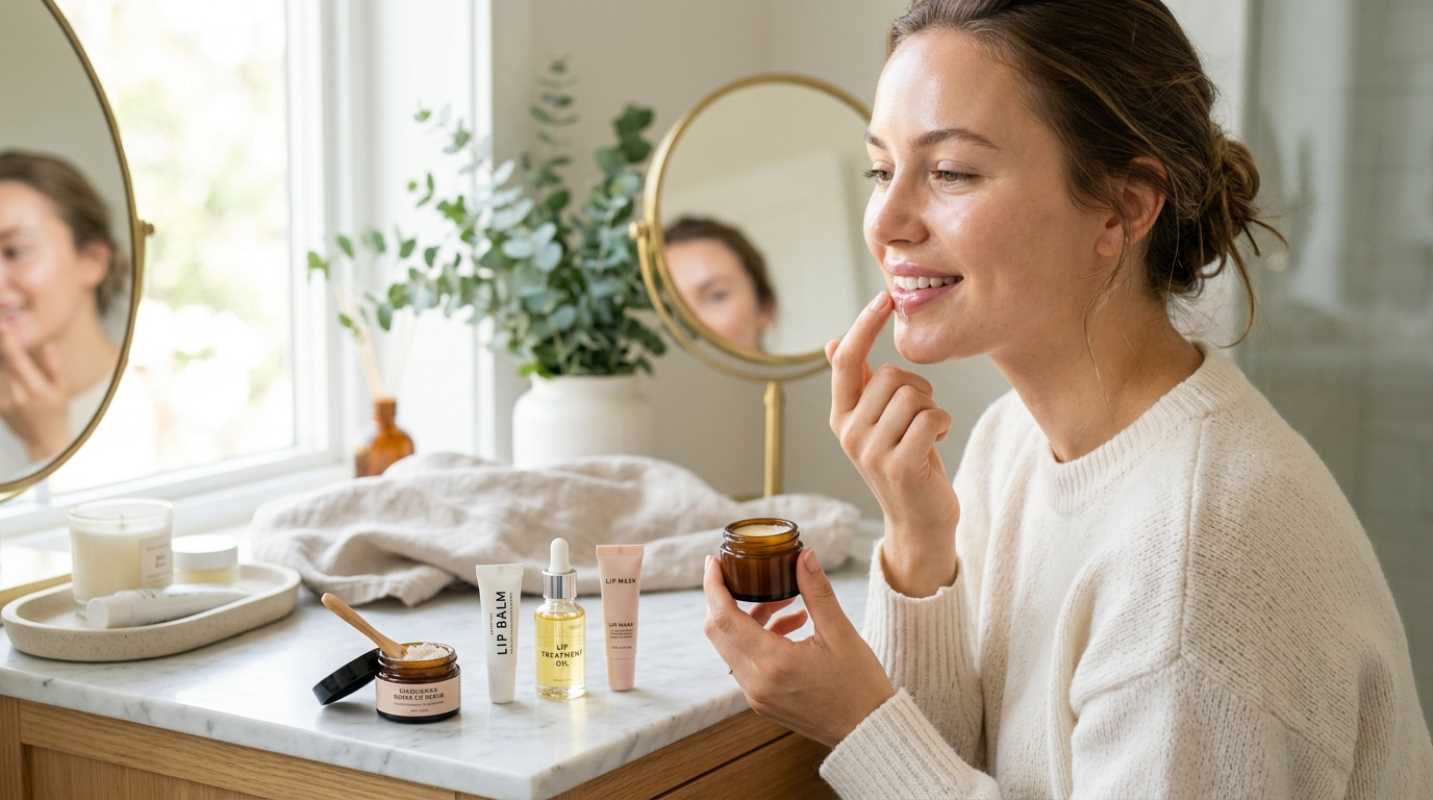
So what does a practical lip care routine look like day to day? You do not need a ten-step process. Simplicity and consistency are what actually deliver results.
Here is how you can organize your daily and weekly lip care
• Morning Care: Dampen your lips with water, pat dry, apply a light hydrating balm, and finish with a broad-spectrum mineral sunblock for lips.
• Reapplication: Keep a fragrance-free, protective balm near your desk or in your bag to apply whenever your lips feel dry.
• Night Care: Apply a generous layer of a ceramide-rich treatment or dense petroleum ointment right before bed.
• Weekly Maintenance: Perform a gentle washcloth buff or DIY brown sugar scrub once every one to two weeks, immediately followed by an intense overnight treatment mask.
Sun protection is the step most people completely overlook. Your lower lip gets hit directly by UV rays every day.
Sun exposure breaks down collagen, leading to premature lines around the mouth, and increases the risk of sun spots. Dermatologists recommend using a daytime lip balm with broad-spectrum mineral SPF 30 or higher, containing zinc oxide or titanium dioxide.³
Watch out for unconscious habits that sabotage your progress. Saliva contains digestive enzymes designed to break down food. When you lick your lips, those enzymes attack your delicate skin. As the saliva evaporates, it takes your lips' existing moisture with it, leaving you drier than before.
If you catch yourself biting, picking, or licking your lips, keep a plain ointment nearby and apply that instead.
Your Best Smile Starts With Care
Taking dedicated care of your lips goes far beyond aesthetic appeal. When your lips are smooth, soft, and pain-free, you feel comfortable throughout your day without worrying about tight skin or stinging cracks.
Lipstick will always look better on a healthy, well-hydrated base. But the true reward is having skin that feels great on its own, without needing a swipe of color to hide behind.
Skip the stinging lip plumpers and scented waxes. Focus on proven ingredients, gentle physical care, and daily sun protection. Your smile will thank you for it.
Sources:
1. Lip Care Products Market Size & Share Outlook
https://www.researchandmarkets.com/reports/5898006/lip-care-products-market-size-share-outlook
2. How to Prevent and Treat Dry Chapped Lips
https://www.biospace.com/how-to-prevent-and-treat-dry-chapped-lips-american-academy-of-dermatologytips-from-board-certified-dermatologists
3. Heal Dry Chapped Lips
https://www.aad.org/public/everyday-care/skin-care-basics/dry/heal-dry-chapped-lips
*This article on decorgeous is for informational and educational purposes only. Readers are encouraged to consult qualified professionals and verify details with official sources before making decisions. This content does not constitute professional advice.*