Have you ever stood in a beauty aisle, staring at a tiny jar of face cream that costs more than your weekly groceries? It is easy to feel like glowing, healthy skin is a luxury reserved only for people with deep pockets. The beauty industry has spent decades convincing us that effective skincare must come in heavy glass bottles with premium price tags.
But here is a secret: your skin doesn't know how much you spent on a product. It only cares about the active ingredients and how consistently you use them.
We're currently living through a massive shift in how people buy beauty products. For the first time in years, mass-market budget brands are growing much faster than prestige luxury brands. Recent data from Circana shows that mass beauty sales rose by 3% while prestige beauty remained completely flat at just 1%.¹ In the UK, the gap is even wider, with mass beauty climbing 17% compared to prestige's 9% growth.¹
So what does this actually mean? It means people are realizing they don't need to spend a fortune to get incredible results. In fact, a McKinsey survey found that a quarter of global consumers are actively trading down to less expensive beauty products to save money.¹ Finding an affordable alternative is no longer something to hide. It's become a badge of honor, especially for younger beauty lovers who treat finding the perfect low-cost dupe as a major win.
The Foundation: Mastering the Needs on a Budget
If you want to build a high-performance routine without draining your bank account, you need to know where to spend and where to save. You don't need to buy ten luxury products to get the skin of your dreams. Instead, focus on a smart mix of budget-friendly powerhouses.
Dermatologists often point out a simple truth: you should always save your money on cleansers. Think about it. A face wash only stays on your skin for about 30 to 60 seconds before you rinse it down the drain. Why spend $50 on something that barely touches your face? Save your cash for the leave-on products like serums and moisturizers that actually stay on your skin to do the heavy lifting.
When you're shopping on a budget, look for products that prioritize skin barrier health. The trend in beauty has shifted away from harsh, stripping acids. Now, it's all about nourishing the skin barrier with affordable ingredients like ceramides, glycerin, peptides, and ectoin.³ Brands like Byoma have built massive followings by focusing entirely on this barrier-first approach, offering high-quality formulas that cost less than $20.²,³
Strategic Layering: Adding Targeted Treatments for Results
To get the most out of a 10-step routine, you need to understand the golden rule of application: apply your products from thinnest to thickest consistency. Start with your most watery liquids, like toners and essences. Then move on to light serums, and finish with your heavier creams and oils. This simple order makes sure that every single layer absorbs properly.
You also don't need to use all ten steps every single day. Some steps, like exfoliating or using sheet masks, should only happen once or twice a week. This saves you both time and money.
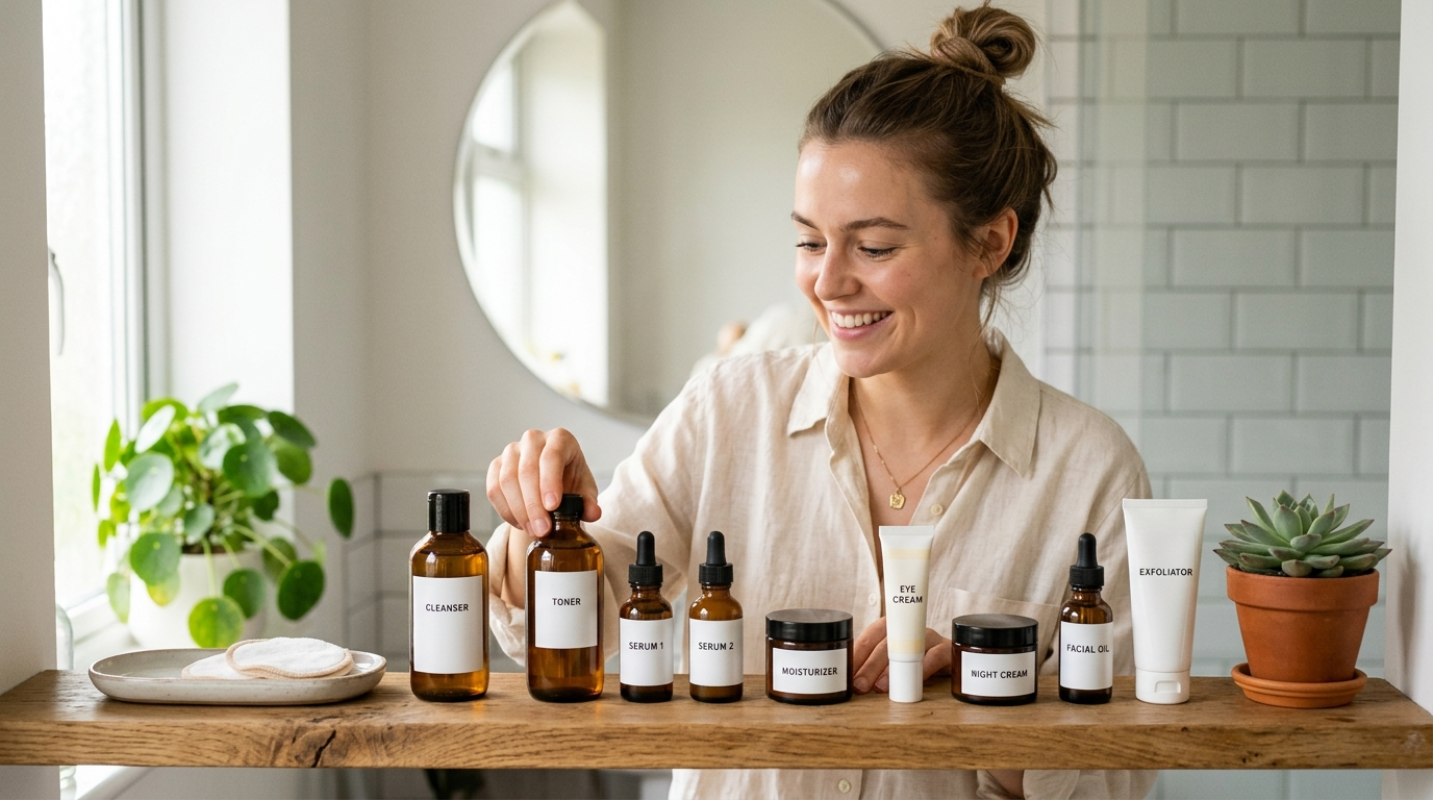
Here is how you can build a complete 10-step routine using highly effective, budget-friendly products.
1. Oil-Based Cleanser (PM): This step breaks down oil-based impurities like sebum, makeup, and waterproof sunscreen. The INKEY List Oat Cleansing Balm costs around $12 and works beautifully to melt away the day without stripping your skin.
2. Water-Based Cleanser (AM/PM): This removes water-based debris like sweat and dirt. You can use the Prequel Gleanser, which contains 50% glycerin to cleanse without drying you out, for about $18.⁵ Another great option is the classic CeraVe Foaming Facial Cleanser for around $15.
3. Exfoliator (1-2x a week, PM): Exfoliating sweeps away dead skin cells to improve texture. The Ordinary Glycolic Acid 7% Exfoliating Toner is an absolute steal at around $13.
4. Toner (AM/PM): A good toner rebalances your skin's pH and adds a quick splash of hydration. The Byoma Hydrating Milky Toner is priced at around $15 and has earned a massive cult following, selling millions of units.⁴
5. Essence (AM/PM): This lightweight liquid preps your skin to absorb your next steps. Try the Good Molecules Hydrating Hyaluronic Acid Boosting Essence for $14.
6. Targeted Serum (AM/PM): This is where you deliver concentrated active ingredients. In the morning, use a brightening option like the Maelove Glow Maker Vitamin C Serum for about $33. At night, try The Ordinary Retinol 0.2% in Squalane for around $8 to target aging.
7. Sheet Mask (1x a week, PM): This step floods your skin with intense moisture. You can grab a pack of LuLuLun Sheet Masks for around $10 to keep costs low.
8. Eye Cream (AM/PM): Protect the delicate skin around your eyes with a targeted cream. The INKEY List Caffeine Eye Cream is a fantastic budget option at around $11.
9. Moisturizer (AM/PM): This seals in all your hydration. Use the La Roche-Posay Toleriane Double Repair Face Moisturizer for about $22, or the Byoma Moisturizing Gel-Cream for $14.
10. Sunscreen (AM) / Sleeping Mask (PM): In the morning, sunscreen is non-negotiable for preventing sun damage. The Beauty of Joseon Relief Sun SPF 50 is a global favorite for around $18. At night, lock everything in with a sleeping mask like The Ordinary Natural Moisturizing Factors + Phytoceramides for about $22.
Smart Shopping Budget Skincare Regimen Tips for 2026
Building a great routine requires more than just choosing cheap products. You also need to shop smart.
First, learn to read the ingredient labels instead of relying on flashy packaging. Many luxury brands charge premium prices simply because of their name or a fancy glass jar. By looking at the back of the bottle, you can find drugstore products that use the exact same active ingredients for a fraction of the cost.
Second, look for multi-purpose products. Finding products that do double duty is a great way to save money. Like, you can use a daily moisturizer that already has SPF built in, or look for a hydrating serum that combines both niacinamide and hyaluronic acid. This keeps your routine simple and keeps money in your pocket.
Finally, stay away from passing skincare trends that don't offer long-term value. It's easy to get swept up in social media hype over a new exotic ingredient, but sticking to proven, affordable classics will always yield better results for your skin and your wallet.
Consistency Over Cost: The Real Secret to Glowing Skin
At the end of the day, the most expensive skincare routine in the world won't do anything for you if it sits unused on your bathroom shelf. Consistency is what actually transforms your skin, not the price tag on your bottles.
Using a simple, affordable routine every single day will always outperform the sporadic use of a luxury cream you only buy once a year because it's too expensive to replace. When you use budget-friendly products, you can afford to use the correct amount of product without worrying about running out.
Take the time to track your progress and adjust your routine based on how your skin actually feels, rather than what is trending online. By choosing smart, affordable formulas, you can take complete control of your skin health and build a routine that works for your face and your finances.
Sources:
1. Cosmetics Business Reveals the Top 5 Budget Beauty
https://cosmeticsbusiness.com/cosmetics-business-reveals-the-top-5-budget-beauty
2. TIME100 Companies: Fashion and Beauty
https://time.com/article/2026/04/28/time100-companies-fashion-and-beauty/
3. Inkey List, The Ordinary, and Byoma Reveal Barrier Care Future
https://cosmeticsbusiness.com/inkey-list-ordinary-byoma-reveal-barrier-care-future
4. Byoma Best Seller Analysis
https://www.accio.com/business/byoma-best-seller
5. Prequel Skincare Explainer and Review
https://www.harpersbazaar.com/beauty/skin-care/a64149398/prequel-skincare-explainer-review/
*This article on decorgeous.com is for informational and educational purposes only. Readers are encouraged to consult qualified professionals and verify details with official sources before making decisions. This content does not constitute professional advice.*