Have you ever looked at your living room on a Tuesday afternoon and felt a lot of urge to drag everything to the curb and start over? You are not alone. That itch to tear down wall art and replace entire sofa sets strikes most of us a few times a year.
A complete home overhaul is expensive, exhausting, and completely unnecessary. You do not need a team of contractors or a massive budget to make your home feel brand new. By leaning into simple seasonal decor swaps, you can dramatically shift the mood of your living space whenever the weather starts to turn.
The Power of the Micro-Refresh
There is a huge psychological benefit to updating your living space with the changing seasons. As human beings, we are wired to respond to environmental shifts outside. When your indoor environment reflects the subtle changes happening outdoors, it creates a grounded, cozy connection to the present moment.
You do not need to alter every square inch of your home to feel that reset. Focusing on small zones, like your entryway console, your fireplace mantel, or the center of your coffee table, gives you a high visual payoff for very little effort. In fact, economic trends show that homeowners are stepping away from expensive overhauls in favor of these targeted micro-updates. The U.S. home decor market reached over $191 billion recently, driven largely by people looking for small, high-impact ways to refresh their personal spaces without breaking the bank.¹
The key to mastering this approach is adopting a strict less is more mindset. Cramming every surface with seasonal knick-knacks creates visual noise rather than cozy ambience. Instead of buying a dozen plastic pumpkins or artificial spring signs, focus on two or three intentional statement swaps that elevate the room without cluttering it.
Mastering the Art of Transitioning Decor Between Seasons
The secret to seamless seasonal decorating lies in your foundation. Start with timeless anchor pieces that stay put all year long. Your main sofa, dining table, primary rugs, and large wooden furniture should remain neutral and constant. Think of them as the canvas, while your seasonal decor acts as the paint.
When you are ready to make a shift, turn your attention to home textiles. Textiles represent nearly 19 percent of the total decor market, and for good reason.² Swapping out fabrics is the absolute fastest way to manipulate temperature, texture, and visual warmth in a room.
Here is a simple blueprint for making that transition seamless across the year.
• The pillow cover trick: Never buy new accent pillows every season. Invest in high-quality feather or down inserts once, then buy zip-off cushion covers that store flat in a drawer. Soft poplin, blush linen, and sage green work beautifully for spring and summer, while heavy velvet, wool knits, and rich plum step up during fall and winter.
• Rugs and throws: Swap heavy, high-pile area rugs or plush faux-fur throw blankets out when warm weather arrives. Replace them with breezy jute mats, raw rattan baskets, and light cotton waffle-weave blankets.
• Grounded color transitions: Step away from stark all-white interiors. Modern color trends favor rich, cozy shades. Try pairing natural terracotta, sky blue, and sand during spring and summer, then transition into deep forest green, cinnamon, and warm chocolate brown when autumn rolls around.
Affordable Seasonal Decor Updates That Actually Look High-End
You do not need to spend a fortune at boutique decor shops to get a luxury look. Some of the most stunning seasonal updates come straight from nature or from clever repurposing tricks.
Bringing organic elements inside creates an instant connection to the current season. In early spring, grab hand pruners and clip a few tall flowering cherry blossom or eucalyptus branches from your yard to place in a tall ceramic vessel. In summer, fill a low marble bowl with fresh lemons or limes on the kitchen island. For autumn, swap those branches for dried pampas grass, oak leaves, or dark berry stems. Winter calls for simple fragrant cedar or pine sprigs.
Another budget hero is room-hopping. Before buying anything new, audit your own house. Move a dark wood tray from your bedroom dresser to the coffee table. Bring a ceramic pitcher out of the dining cabinet to hold summer wildflowers. Giving existing items a new context makes them feel instantly fresh.
When you do buy new items, focus on tactile materials like raw travertine, glazed ceramics, brushed brass, and mouth-blown glass. These materials catch the light beautifully and always feel high-end, regardless of what you paid for them.
Storage Tips for Rotating Decorations Like a Pro
The biggest bottleneck to seasonal decorating is the nightmare of unpacking and repacking bulky boxes. If getting your fall decor out feels like an endurance sport, you are doing it wrong. A streamlined storage system keeps the process fun and stress-free.
• Invest in clear polypropylene bins: Cardboard boxes absorb basement moisture and attract unwanted pests. Use heavy-duty clear plastic totes so you can instantly see what is inside without opening them.
• Color-code your lids: Match the bin lids to the season. Use orange lids for autumn, green or red for winter holidays, and clear or blue for spring and summer.
• Shrink bulky linens with vacuum bags: Heavy velvet comforters, faux fur throws, and holiday accent pillows take up a massive amount of real estate. Vacuum-seal storage bags reduce that volume by up to 75 percent, freeing up valuable closet shelves.
• Use the one-in, one-out rule: To prevent your storage areas from exploding over time, commit to donating or selling an old piece of decor every time you purchase a new one.
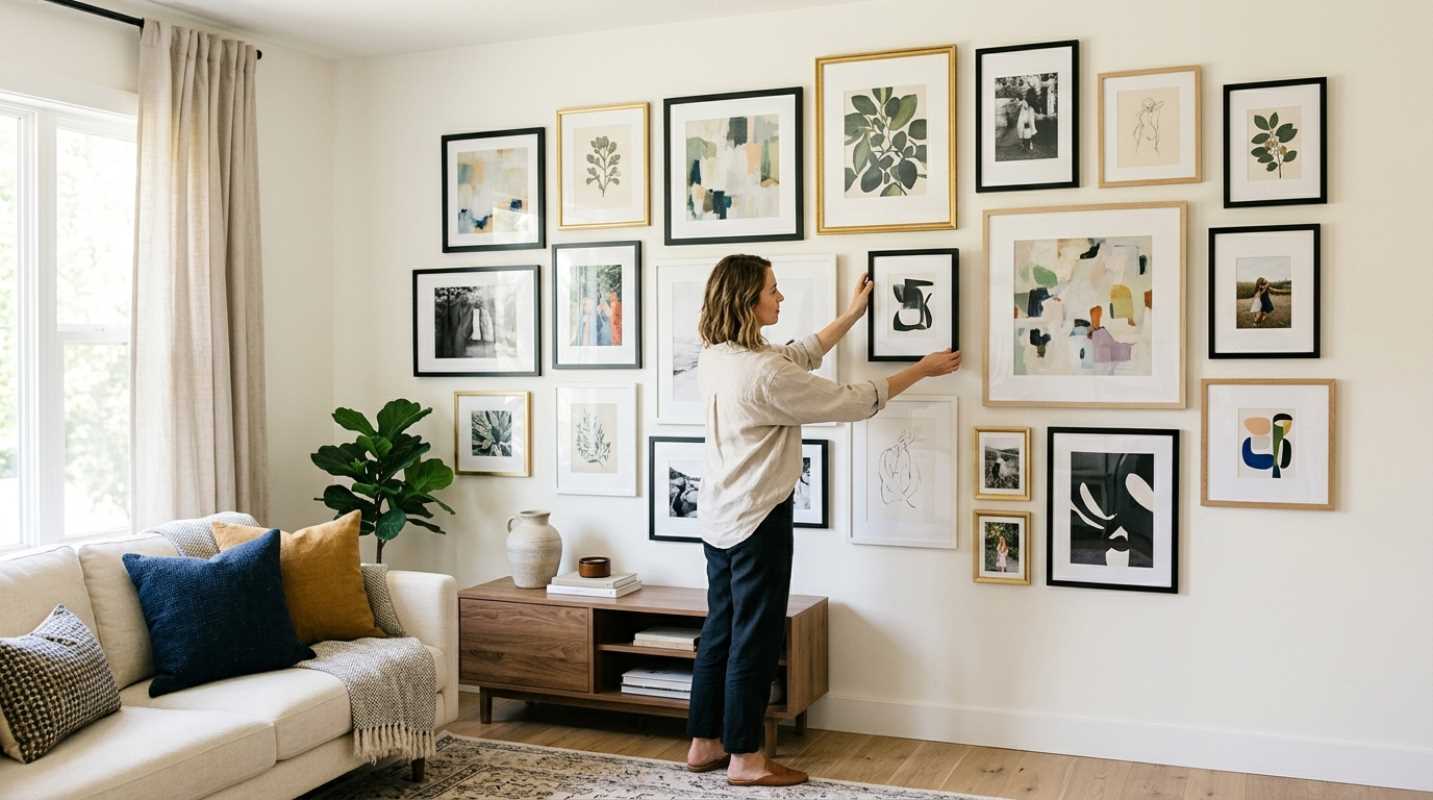
For off-season art prints, consider flat-packing them. Storing extra canvas or paper prints inside a thin portfolio folder tucked under a bed or in the back of a closet takes up almost zero space and lets you swap out your gallery wall frames in minutes.
Curating Your Seasonal Signature Style
It is easy to get swept up in viral design trends, but your seasonal decor should always feel like an extension of your personal style. If your house is decorated in an airy modern aesthetic, forcing bright rustic orange items everywhere during October will feel disjointed. Adapt seasonal colors to your existing palette instead.
Beyond visual items, do not forget about sensory elements like lighting and scent. They do heavy lifting for setting a seasonal mood.
As winter approaches and daylight shrinks, swap out cold daylight lightbulbs for warmer tones in your table lamps to create a inviting glow. Pair that light with richer, woodier home fragrances like cedarwood, amber, and vanilla. When spring arrives, flip the switch back to bright daylight tones and refresh your home with crisp scents like cucumber, lime, and white floral notes.
Refreshing your home with the seasons should be an enjoyable ritual, not a stressful chore. By focusing on simple textile swaps, organic touches, and clever storage, you can keep your space feeling fresh, current, and deeply comfortable all year long.
Sources:
1. United States Home Decor Market Statistics
https://www.imarcgroup.com/united-states-home-decor-market-statistics
2. Home Decor Market Stats and Trends
https://www.printful.com/blog/home-decor-market